Guide: School video production
Can you film in a school? Consent, GDPR and safeguarding for school photos and videos
Yes, schools can film and photograph pupils. What UK GDPR, the ICO and KCSIE 2026 say about consent, safeguarding, DBS checks and running a safe shoot.
Last checked
Yes, you can film and take photographs in a school. It is legal as long as the school has a lawful reason under data protection law, tells families what it plans to do, respects anyone who opts out and keeps safeguarding first.
This guide explains what that means in practice, using current guidance from the Department for Education (DfE), the Information Commissioner’s Office (ICO), the NSPCC and Keeping Children Safe in Education 2026. It then walks through how a well-run shoot works.
Is it illegal to film in school?
No. There is no law that bans filming or photography in schools. DfE’s own guidance lists marketing, newsletters, social media, sports events and performances among the normal reasons schools take photos and videos.
What makes it lawful is how you do it. A photo or video of someone who can be identified counts as personal data, so it falls under data protection law, including UK GDPR. On top of that sit your safeguarding duties and your own school policies.
What does UK GDPR say about photos of pupils?
The school needs a lawful basis before it takes, uses or shares images. DfE’s guidance names three to consider:
- Public task, where images are needed to carry out the school’s official duties
- Consent, where the pupil or their parent or carer has agreed
- Legitimate interests, where the school has a genuine reason that is weighed against the pupil’s rights
The ICO says it would expect most publicly funded schools to look at public task. Even then, if you want to use pupils’ photos for promotion, the ICO would generally expect you to offer parents, or older pupils, a way to opt out.
Consent has a specific meaning in law. It must be freely given, specific, informed and unambiguous. It can be withdrawn at any time, and you must keep records of who gave it, when, how and what they were told. Because it can be withdrawn, it is not always the best basis. Agree the right one with your data protection officer. DfE says your privacy notice must explain the basis you use and how families can opt out.
DfE also says that once pupils can understand how their images will be used, often at around 13, it is good practice to ask them directly.
Can schools post pictures of students on social media?
Yes, with extra care. DfE notes that many schools collect specific consent for social media, and says families should know that it involves wider sharing and may carry higher privacy risks.
Good habits, drawn from DfE and NSPCC guidance:
- Check your consent or opt-out list before every post
- Do not put pupils’ full names alongside their photos
- Remove location data from image files before uploading
- Choose images that focus on the activity, not on one child
- Never post images of pupils who must not be identified (see below)
- Give access to the school’s accounts only to trained staff
- Take an image down straight away if a family withdraws permission
If a family withdraws permission after a printed prospectus has gone out, DfE and the ICO both say you do not have to recall the copies, but you must stop using the image in future. Our guide to what schools should post on social media goes into more detail.
How to keep an accurate photo consent list
Most schools collect families’ preferences at the start of the school year. The ICO recommends sharing your photo policy at that point, including the events where you plan to take pictures and how to opt out. DfE says many schools refresh consent every year.
- Record preferences in your management information system, so the list is always current.
- If you plan to use images for a new purpose, such as a promotional film, check the original permission covers it. DfE’s own example is a video montage that the start-of-year consent did not cover.
- Print a simple, up-to-date list for the day of any shoot.
- Agree how to identify pupils who should not be filmed. NSPCC suggests a sticker, badge or wristband, used in a way that does not make children feel singled out.
- Never leave a child out of an activity because you do not have permission to photograph them. NSPCC is clear on this. Film around them instead.
What should a school photo and video policy include?
DfE recommends publishing a clear photo and video policy alongside your privacy notice. It should explain:
- how your school uses photos and videos
- where they will be published
- how long they will be kept
- what you expect from pupils, parents and visitors using their own phones and cameras
NSPCC Learning offers an example photography and filming policy statement that schools can adapt. Share the policy with families at the start of the year, so nobody is surprised when a camera appears.
Looked-after children and pupils who must not be identified
Some pupils must never appear in published images. DfE gives examples: pupils with safeguarding concerns, and pupils under court orders. NSPCC adds children in local authority care or who have been adopted, whose identity may need protecting, and families who have experienced abuse and worry about being traced.
For a child in care, NSPCC says consent should come from someone with parental responsibility, such as the carer or the local authority.
Before anything is published, ask your designated safeguarding lead to check it. Group shots need the same care as close-ups. DfE notes that a group photo may need editing or replacing if one pupil cannot appear.
Do film crews and photographers need a DBS check?
Keeping Children Safe in Education 2026, in force since 1 September 2026, sets out what schools should do when they use contractors. In summary, schools should:
- set out their safeguarding requirements in the contract
- make sure anyone working on site has had the appropriate level of DBS check
- check contractors’ identity when they arrive
- never let a contractor on whom no checks have been obtained work unsupervised
DfE’s photo guidance adds that if you use an external photographer, the contract should make clear who is responsible for data protection.
So before any crew comes in, ask three questions. Is everyone DBS-checked? Who exactly will be on site? How will you store, share and delete the footage?
How a well-run school shoot works
Before the day
- Agree the purpose: where the images will be used, and for how long.
- The school shares an up-to-date consent list and flags any pupils who must not be identified, ideally through the designated safeguarding lead.
- Plan the shoot around the timetable, with named contacts and agreed areas.
- Remind families what is happening and when, and how to opt out.
On the day
- The crew signs in, has ID checked and wears visitor lanyards.
- A member of staff stays with the crew.
- Pupils without permission are identified discreetly, and the crew films around them.
- No personal phones. Footage stays on professional equipment and secure storage, as agreed in the contract.
After the shoot
- Footage goes to secure storage straight away.
- The school reviews and approves every edit before anything is published.
- Unused footage is kept or deleted as the contract says.
- If a family later withdraws permission, the image comes down from digital channels and is left out of future versions.
What about parents filming the school play?
The ICO says data protection law does not usually cover photos people take for personal use, such as for a family album. Schools can still set rules, for example banning filming so it does not disturb a performance, but that is a school decision, not a data protection one. DfE suggests explaining your rules in your photo policy and reminding parents before big events. If a parent shares images of other children publicly, DfE says that may fall under data protection law, and you can ask them to take it down.
Filming safely with Moments
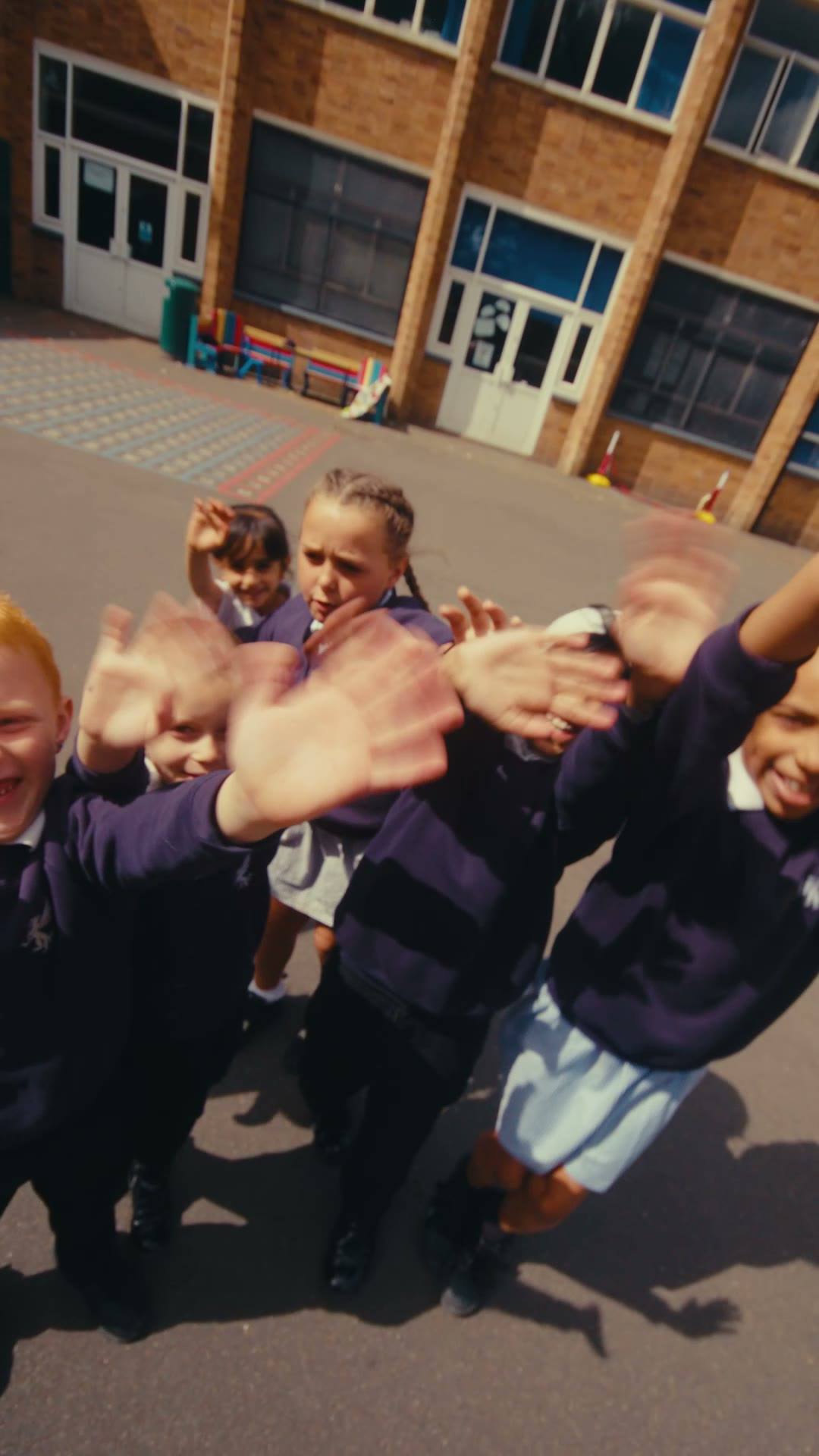
Every Moments crew member is DBS-checked and briefed on consent before we set foot on site. We check your photo consent list before filming and plan the day around your timetable. For Bournville School we filmed in school, on ordinary days and at big events, to create a series of social media videos for the school to post on its own channels.
See our school video production and school photography services, or get in touch for a clear, fixed quote.
FAQs
Common questions
- Do we need parental consent to film pupils?
- Not always as the legal basis. DfE lists public task, consent and legitimate interests as options, and the ICO says it would expect most publicly funded schools to look at public task. Whichever basis you use, tell families in advance, give them a clear way to opt out and check your list before any image is used.
- Can pupils give their own consent to photos?
- DfE guidance says that once pupils can understand how their images will be used, often at around 13, it is good practice to ask them directly as well as, or instead of, their parents. Schools should still think about safeguarding, because a young person may not see every risk.
- What happens if a parent withdraws consent after the prospectus is printed?
- Take the image down from your website and social media and leave it out of anything new. The ICO and DfE both say a school does not have to recall printed copies that have already gone out, but it must not use the photo in future versions.
- How long can a school keep photos and videos of pupils?
- Only as long as you need them for the purpose you told families about. DfE says images must be stored securely and disposed of in line with your data retention policy, and recommends that your photo and video policy explains how long images are kept.
- Can a school stop parents filming the school play?
- Yes, if it chooses to. The ICO says data protection law does not usually cover photos taken for personal use, such as a family album, but a school can still set its own rules, for example to avoid disturbing a performance. DfE suggests explaining those rules in your photo policy and reminding parents before big events.
Sources
- GOV.UK: Data protection in schools, taking and using photos and videos, and using CCTV in schools (opens in a new tab)
- ICO: Taking photographs, data protection advice for schools (opens in a new tab)
- NSPCC Learning: Photographing and filming children (opens in a new tab)
- GOV.UK: Keeping children safe in education 2026 (opens in a new tab)
- GOV.UK: Data protection in schools, data protection policies and procedures (opens in a new tab)